







September 23, 2025
Dental Extraction & Implant: Is It Right For You?
Many people wonder whether removing a damaged tooth and replacing it with an implant is the right choice. This article explains what a dental extraction and implant involves, who usually needs it, the steps and timeline, risks and benefits, and how to decide if it’s right for you. If you have a broken, painful, or missing tooth, extraction plus an implant can restore chewing, speech, and your smile.
What Is Dental Extraction And Implant?
A dental extraction and implant means removing a tooth that can’t be saved, then placing a titanium implant into the jaw to hold a crown later. There are two common approaches: immediate implant placement (the implant goes in the same day as the extraction) and delayed placement (the site heals first, then the implant is placed weeks or months later). Each approach has pros and cons depending on bone health, infection, and cosmetic needs.
Common Reasons Patients Need Extraction Before An Implant
- Severe decay that destroys most of the tooth
- A tooth broken below the gum line
- A failed root canal with persistent infection
- Advanced gum disease causing loose teeth
- Crowding or teeth that must be removed before implant planning
Leaving a damaged tooth can spread infection, speed bone loss, and harm neighboring teeth. Extracting a problem tooth before placing an implant helps protect the jaw and makes the implant more likely to succeed.
Who Is A Good Candidate For Dental Extraction And Implant?
Good candidates are adults in generally good health with healthy gums and enough jawbone to support an implant. Factors that may need extra care or affect success include:
- Smoking — slows healing and raises failure risk
- Uncontrolled diabetes — increases infection risk
- Low bone density — may require bone grafting first
- Certain medications or medical conditions — discuss with your doctor
The Typical Treatment Steps
Initial exam and planning
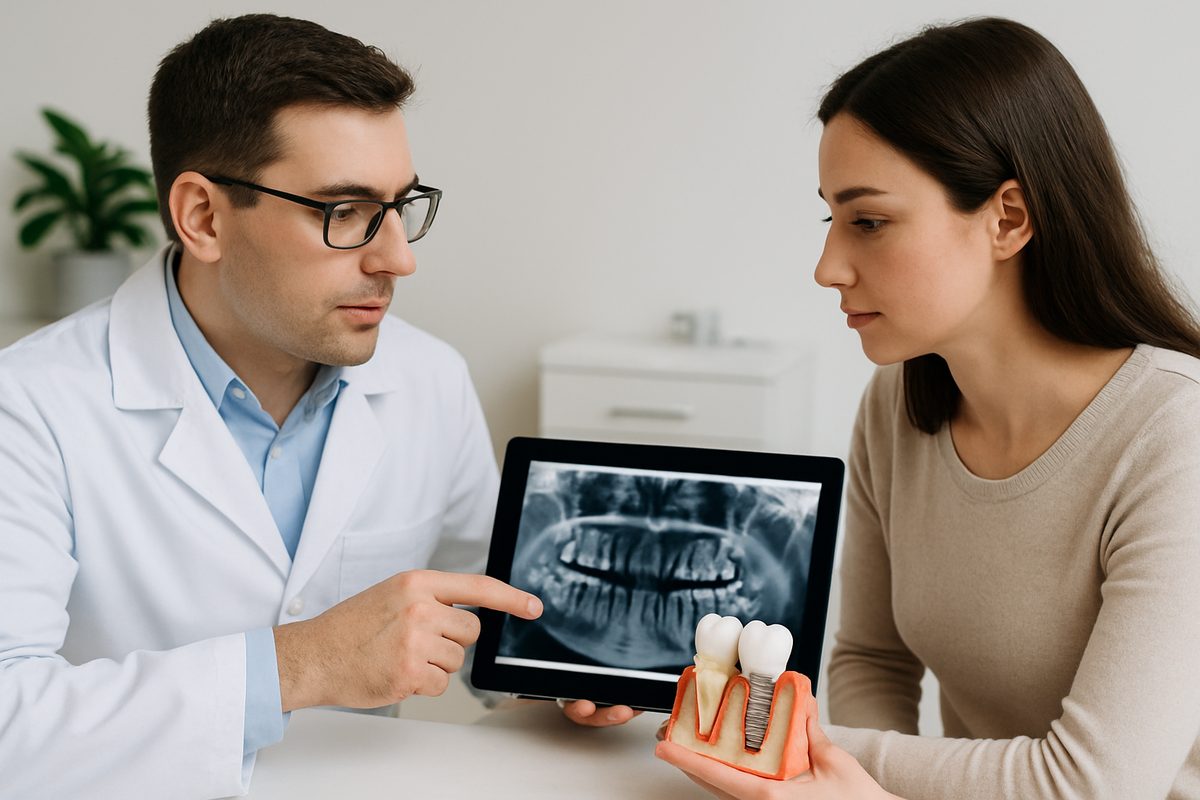
Expect a clinical exam and imaging (X-rays or CBCT) to check bone, nerves, and sinus location. Your dentist will explain implant types and a recommended plan.
Extraction and possible grafting
Extractions range from simple (loose or visible) to surgical (root fragments or broken teeth). If bone is missing or thin, a bone graft may be placed at the time of extraction or later to preserve or rebuild the site.
Implant placement and healing
The implant is placed into the bone and left to heal while the bone fuses to the implant (osseointegration). Healing usually takes several weeks to a few months. Once integrated, a custom crown is attached to restore the tooth’s look and function.
Risks, Complications, And Benefits
Common risks
- Infection at the site — look for swelling, fever, or drainage
- Implant failure — rare, but may require removal
- Nerve irritation — temporary numbness or tingling in lip or tongue
- Sinus problems when upper back implants extend into the sinus
Long-term benefits
- Restored chewing and clearer speech
- Prevents further bone loss compared with a missing tooth
- Natural appearance and greater comfort than removable dentures
- High long-term success with proper care
Alternatives To Dental Extraction And Implant
Alternatives include dental bridges and removable partial dentures. Bridges are faster and often less costly up front but require shaping neighboring teeth. Dentures cost less initially but can feel less stable and may speed bone loss. A bridge or denture might be a practical short-term or lower-cost choice for some patients.
Cost, Timeline, And Insurance Basics
Treatment can take weeks to several months depending on grafting and healing. Costs vary by location, complexity, and whether bone grafts or CT scans are needed. Many dental plans cover part of the extraction and crown, but implants may have limited coverage. Ask about financing and payment plans to spread costs.
How To Decide If Dental Extraction And Implant Is Right For You
Ask your provider these key questions:
- Is the tooth salvageable, or is extraction the best option?
- Will I need a bone graft or sinus lift?
- What are the success rates and possible complications for my case?
- What is the full timeline from extraction to final crown?
- What will the total cost include and what does my insurance cover?
If you’re unsure, get a second opinion to compare recommended plans.
Next Steps — Finding Care And What To Expect From A Provider
Pearl Dental Associates offers comprehensive implant planning and advanced technology like CBCT scanners, digital impressions, CEREC same-day crowns, and regenerative healing therapies. The team provides complimentary consultations and second opinions, a five-year guarantee on procedures, and flexible appointment options.
To discuss dental extraction and implant in Holbrook or Scituate, MA and get a personalized plan, schedule a consult with a qualified implant dentist. A short exam and imaging will clarify your options and next steps.
