



September 23, 2026
Gum Disease Treatment, Start to Maintenance: A Patient’s FAQ
Gum disease is more common than you might think, and in many cases, it develops without noticeable pain or discomfort. Whether you’ve recently been diagnosed or are concerned about symptoms like bleeding gums, understanding your treatment options is an important first step.
From your initial diagnosis to ongoing periodontal maintenance, here’s what you should know about gum disease treatment, what to expect during the process, and how to keep your gums healthy long-term.
Contact Pearl Dental Associates to schedule a consultation and take the first step toward healthier gums today.
The Questions That Come Up After a Periodontal Exam
What is gum disease, and why does it matter for my overall health?
Gum disease, also known as periodontal disease, is a bacterial infection of the tissues that support your teeth. It begins as gingivitis, a mild inflammation of the gums, and can progress to periodontitis, a more serious condition that may damage the bone and tissue holding teeth in place. Research suggests a connection between untreated gum disease and systemic conditions such as cardiovascular disease and diabetes. Early gum disease treatment is one of the most important investments you can make in your total well-being. Our Gum Disease Symptoms and Treatment page offers a helpful overview of warning signs to watch for.
What does the treatment itself involve?
Gum disease treatment addresses bacterial buildup and infection below the gumline through a range of clinical approaches tailored to the severity of your condition. For early-stage disease, a deep cleaning procedure called scaling and root planing is often the first step; your provider removes tartar and smooths the root surfaces so gum tissue can reattach. More advanced periodontitis may require surgical intervention or adjunctive therapies. At Pearl Dental Associates, our multi-doctor team brings diverse specializations to each case, helping ensure your treatment plan reflects the full picture of your oral health needs.
Which symptoms does treatment actually resolve?
Gum disease treatment may help address symptoms including swollen or bleeding gums, persistent bad breath, gum recession, loose teeth, and deep pockets between the gums and teeth. If you have noticed that your gums bleed when you brush or that your teeth feel less stable than they once did, these can be early signals worth discussing with a provider. Gum recession in particular is a common and often underestimated concern; you can learn more on our Gum Recession Treatment page. Early intervention generally leads to better outcomes and may reduce the risk of tooth loss.
Am I a good candidate for gum disease treatment?
Most adults who show signs of gum inflammation, recession, or bone loss are candidates for some form of gum disease treatment. Risk factors that may increase susceptibility include smoking, diabetes, certain medications, hormonal changes, and a family history of periodontal disease. A thorough periodontal evaluation at Pearl Dental Associates will help determine where you are on the spectrum from early gingivitis to advanced periodontitis and what treatment pathway makes the most sense for your situation. Candidacy is assessed case by case by one of our providers. We treat patients from young adults through older generations, and parents worried about a child’s gum health can start with our pediatric dentistry services.
What happens at the first appointment?
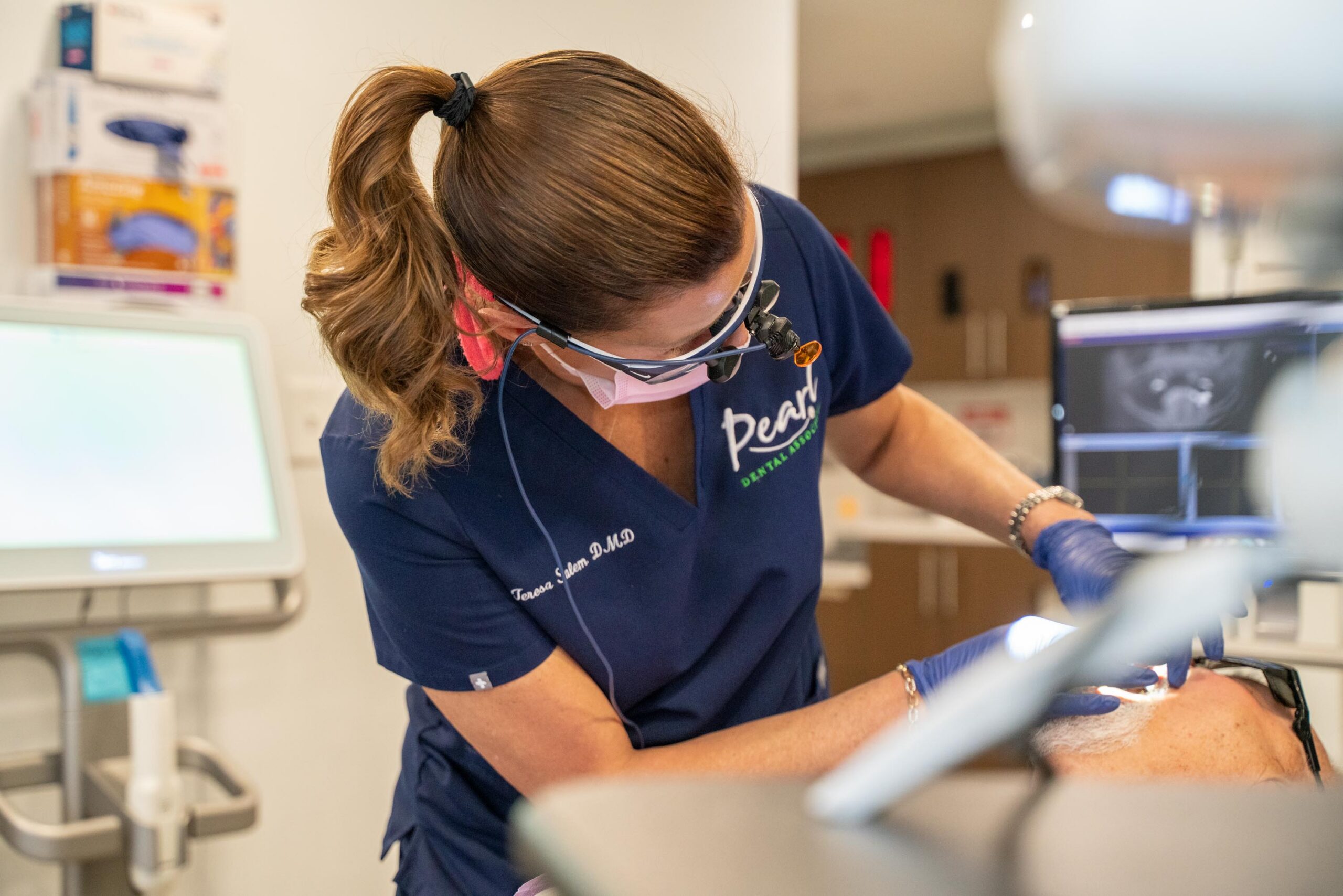
Your first visit will typically include a full periodontal examination, including measurements of gum pocket depths and a review of your dental and medical history. Digital imaging may be used to assess bone levels. If treatment is recommended, your provider will walk you through a detailed plan before any procedure begins. Scaling and root planing is generally performed with local anesthetic, and most patients find the experience well-tolerated. Pearl Dental Associates uses advanced dental technology to support precision and patient comfort throughout every stage of care.
How many visits, and then what?
Treatment duration depends on the severity of your condition. A single scaling and root planing appointment may address a limited area, while more advanced cases may require multiple sessions over several weeks. Following active treatment, most patients transition to a periodontal maintenance schedule, typically every three to four months, to sustain the gains achieved. Your provider at Pearl Dental Associates will set realistic expectations based on your specific diagnosis.
How is periodontal treatment paid for?
Coverage for periodontal treatment varies depending on your dental insurance plan and the type of treatment needed. We recommend contacting your insurance provider to better understand your benefits and any out-of-pocket costs. You can also contact our team at Pearl Dental Associates with questions about payment options or visit our insurance and financing page for more information.
What makes Pearl Dental Associates in Holbrook and Scituate different from other dental practices?
Pearl Dental Associates is a multi-doctor practice, which for a periodontal case means the person reading your pocket depths is not the only person thinking about them. Dr. Teresa Salem has been in practice since 1996 and holds Diplomate status with the International Dental Implant Association. Dr. Nicole Caron earned her Bachelor of Science at Emmanuel College, her Master of Science at Boston University, and her dental doctorate at the University of New England College of Dental Medicine. Dr. Blaire Marshall completed her Doctor of Dental Surgery at the University of Oklahoma. That range, paired with in-house technology including CEREC, is what lets gum treatment, restorative work, and whatever comes next stay under one roof in Holbrook, MA.
Why do two patients get different plans?
Several variables shape the treatment plan your provider recommends, including the stage and extent of the disease, the depth of periodontal pockets, the presence of bone loss, your overall medical history, and whether contributing factors such as tobacco use or unmanaged systemic conditions are present. Treatment may also be coordinated with other dental needs; for example, patients who have experienced significant tooth loss alongside gum disease may benefit from exploring dental implant options as part of a longer-term restorative plan. A thorough consultation is the best starting point for understanding what your specific care may involve.
What are the days right after a deep cleaning like?
Recovery following scaling and root planing is generally manageable for most patients. Some tenderness, mild swelling, and sensitivity to temperature are common in the days following treatment, and over-the-counter pain relievers are often sufficient for comfort. Your provider will give you specific post-care instructions, which typically include gentle brushing, avoiding hard or crunchy foods temporarily, and using any prescribed rinses. More involved surgical procedures may require a longer recovery period, which your provider will discuss with you in advance. Pearl Dental Associates is available to answer questions and provide support throughout your healing process.
What are the risks, and how do they compare to waiting?
Gum disease treatment performed by a qualified dental provider is considered safe and well-tolerated by most patients. As with any clinical procedure, there are potential considerations such as temporary sensitivity, minor bleeding, or soreness following deep cleaning. Leaving gum disease untreated carries considerably greater risks, including progressive bone loss and eventual tooth loss. Our team takes time to review your health history and discuss any concerns before beginning treatment, so you feel informed and confident in the care you receive. To learn more about our approach and team, visit our About Pearl Dental Associates page.
The Case for Treating It Early
The arithmetic on gum disease favours acting early by a wide margin. Scaling and root planing on shallow pockets is a short course of appointments; the same disease left alone becomes bone loss, mobile teeth, and a conversation about replacing them. Dr. Salem carries the values she developed through dental mission work in the Dominican Republic into that conversation, which in practice means telling patients plainly where they sit on the spectrum rather than softening it. Our offices in Holbrook and Scituate, MA are equipped for precise, comfortable care from early gingivitis through more advanced periodontal needs, and our gum disease treatment in Holbrook and Scituate, MA page sets out the full range.
Bleeding Gums Are the Cheapest Time to Act
Pocket depths do not improve on their own, and the window where treatment is short and conservative closes quietly. If a hygienist has flagged bleeding, recession, or numbers creeping past four millimeters, that is the moment to get a full periodontal evaluation rather than the next recall. Request an evaluation through our contact page or call one of our offices to get on the schedule.

Teresa Salem, DMD
Dr. Teresa Salem is a recognized leader in dental implantology and same-day smile makeovers, having placed thousands of implants and completed hundreds of complex All-on-X cases. With nearly three decades of experience, she combines advanced technology, an in-house digital workflow, and patient-centered care to deliver efficient, high-quality treatment with greater affordability. A Diplomate of the International Dental Implant Association and nationally recognized speaker, Dr. Salem is trusted by both patients and providers for her clinical expertise and compassionate approach.